Symptoms of Stomach Cancer: Test, Detect & Diagnose Stomach Cancer
A thorough and accurate stomach cancer (also known as gastric cancer) diagnosis is the first step in developing a treatment plan. Specialists in the field use a variety of tools and tests designed for diagnosing this form of cancer, evaluating the disease and developing individualised treatment plans. Throughout treatment, laboratory tests and imaging tools will be used to monitor response to treatment and modify the treatment plan when needed.
In this blog, we first detail the signs and symptoms of stomach cancer and then we provide details about the tests, detection and diagnosis stages to expect if stomach cancer is suspected.
Main symptoms of stomach cancer
There are many possible symptoms of stomach cancer, but they might be hard to spot.
Ways in which the symptoms can affect digestion include:
- feeling full very quickly when eating
- feeling and/or being sick
- having problems swallowing (dysphagia)
- heartburn or acid reflux
- symptoms of indigestion, such as burping a lot
Other symptoms include:
- a lump at the top of your tummy
- feeling tired or having no energy
- loss of appetite or losing weight without trying to
- pain at the top of your tummy
NOTE: If you have another condition, such as gastro-oesophageal reflux disease, you may get symptoms like these regularly. You might find you get used to the symptoms you’re experiencing, but it's important to be checked especially if symptoms change, get worse, or do not feel normal for you.
Tests for Stomach Cancer
Stomach cancer is usually found when a person goes to the doctor because of signs or symptoms they are having. If stomach cancer is suspected, exams and tests will be needed to find out for sure. If cancer is found, other tests might then be needed to learn more about it.
Medical history, physical exam, and tests to look for bleeding
When taking your medical history, the doctor will ask about your symptoms and possible risk factors to see if they might suggest stomach cancer or another cause. The physical exam can give your doctor information about possible signs of stomach cancer or other health problems. In particular, the doctor will feel your belly for anything abnormal.
The doctor might order a blood test to look for anaemia (a low red blood cell count), which could be caused by the cancer bleeding into the stomach. A test might also be done to look for blood in your stool (faeces) that can't be seen by the naked eye, which could also be a sign of bleeding in the stomach.
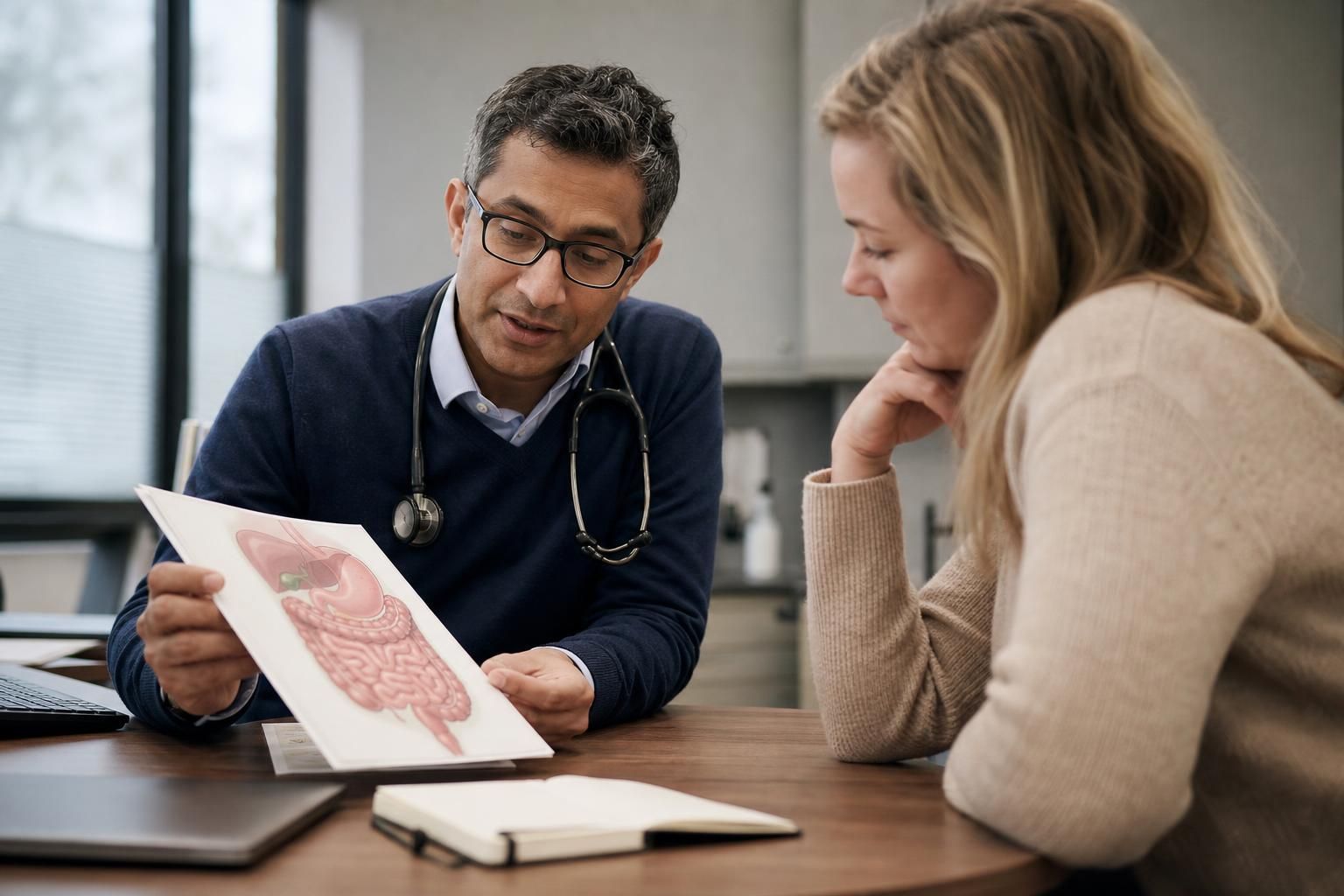
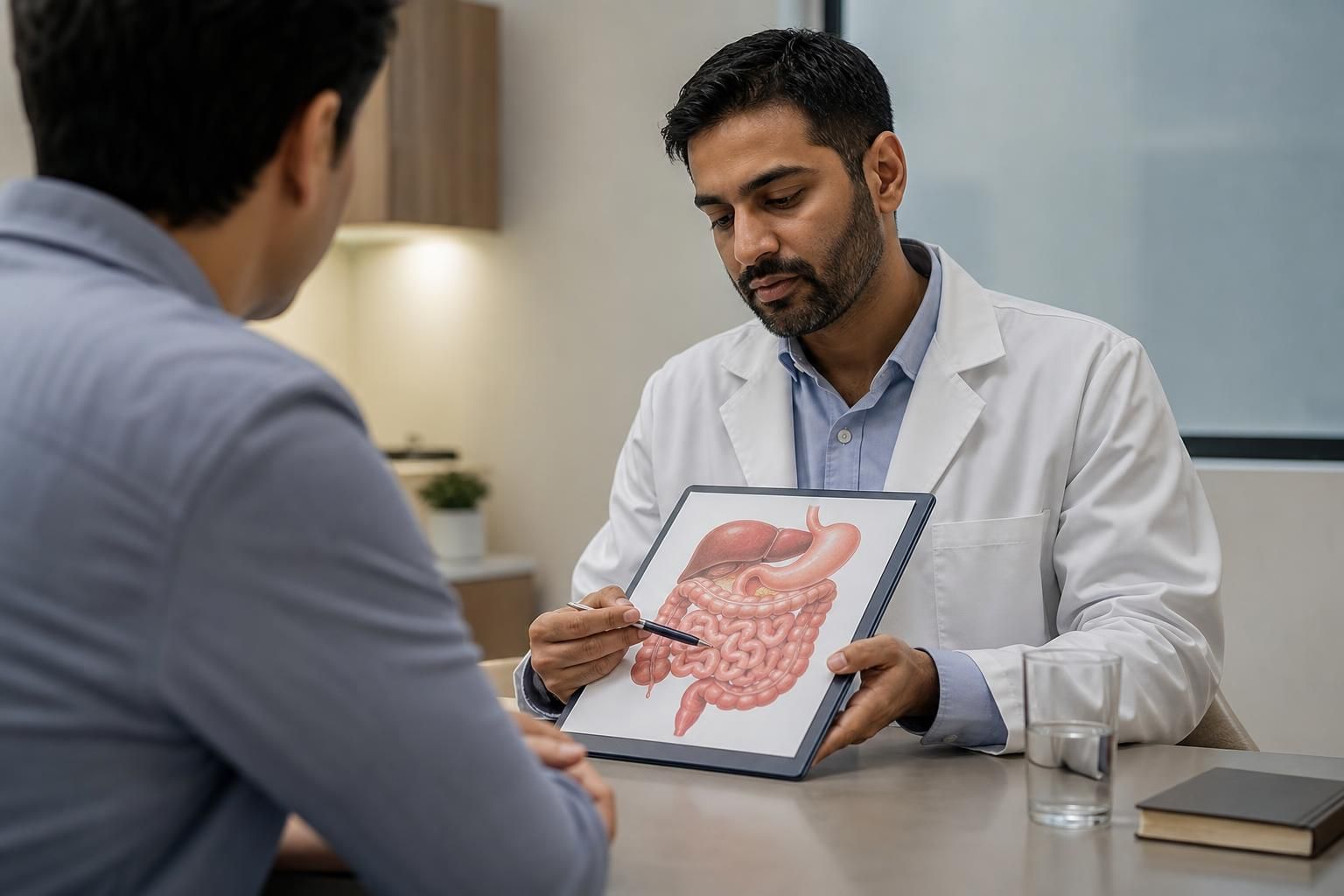
If your doctor thinks you might have stomach cancer or another type of stomach problem, they will likely refer you to a gastroenterologist (a doctor who treats diseases of the digestive tract), who will examine you and might do further testing.
Upper endoscopy
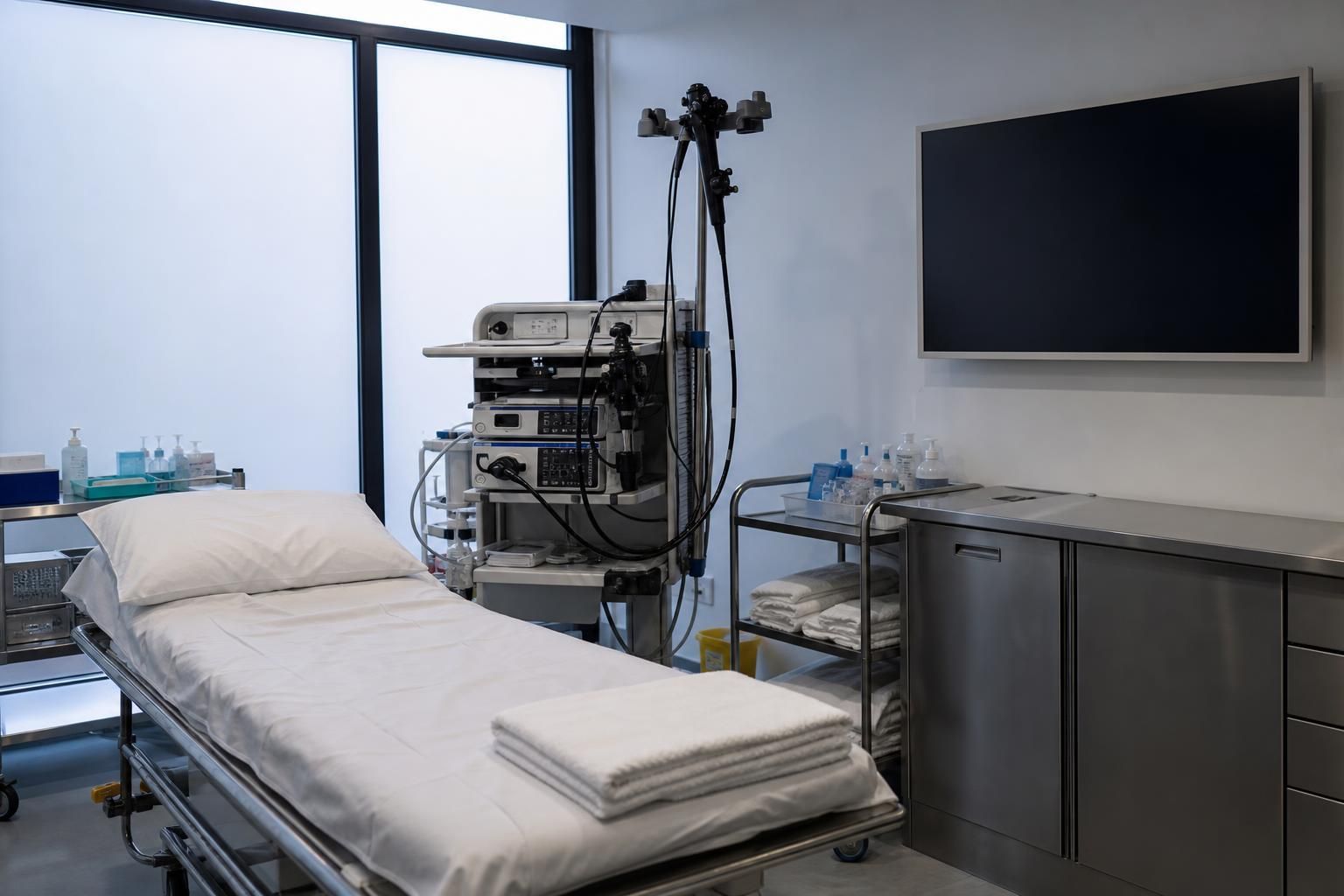
Upper Endoscopy (also known as esophagogastroduodenoscopy or EGD for short) is the test most often done if the doctor thinks you might have stomach cancer.
During this test, the doctor passes an endoscope, which is a thin, flexible, lighted tube with a small video camera on the end, down the throat. This lets the doctor see the inner lining of the oesophagus, stomach, and first part of the small intestine. If abnormal areas are seen, biopsy samples can be removed using instruments passed through the endoscope. The tissue samples are sent to a lab, where they are looked at with a microscope to see if they contain cancer.
In some situations, endoscopy can be used to help remove very early-stage cancers. It can also be used to help prevent or relieve symptoms or other complications from stomach cancer, without requiring more extensive surgery.
For more information on what an endoscopy is and how it links to the testing of stomach cancer, please click HERE.
Biopsy
Your doctor may suspect cancer if an abnormal-looking area is seen on an endoscopy, but the only way to tell for sure if it's cancer is by doing a biopsy. During a biopsy, the doctor removes small samples of the abnormal area.
Biopsies to check for stomach cancer are most often done during an upper endoscopy. If the doctor sees any abnormalities in the stomach lining during the endoscopy, instruments can be passed down the endoscope to biopsy them.
Some stomach cancers can start deep within the stomach wall, which can make them hard to biopsy with standard endoscopy. If the doctor suspects cancer might be deeper in the stomach wall, endoscopic ultrasound (described below) can be used to get a biopsy sample.
Biopsies may also be taken from areas cancer could spread to, such as nearby lymph nodes or other areas/ parts of the body.
Testing biopsy samples
Biopsy samples are sent to a lab to be looked at under a microscope. The samples are checked to see if they contain cancer, and if they do, what kind it is (for example, gastrointestinal stromal tumour [GIST], lymphoma, carcinoid tumour etc).
If stomach cancer is found, more lab tests may be done on the biopsy samples to learn more about the cancer cells, and this can affect how the cancer is treated.
HER2 testing: The cancer cells may be tested to see if they have too much of a growth-promoting protein called HER2. Cancers with increased levels of HER2 are called HER2-positive. These cancers can be treated with drugs that target the HER2 protein.
The biopsy sample is usually tested for HER2 using either immunohistochemistry (IHC) or fluorescent in situ hybridization (FISH). Often the IHC test is used first, which gives results on a scale from 0 to 3+.
- If the results are 0 or 1+, the cancer is HER2-negative, so drugs targeting HER2 aren’t likely to be beneficial.
- If the test comes back 3+, the cancer is HER2-positive, so treatment with drugs targeting HER2 could be an option.
- When the result is 2+, the HER2 status of the cancer is not clear, so it needs to be tested with FISH to clarify the result.
Testing for other gene or protein changes: The cancer cells may also be tested for other gene or protein changes that might affect treatment. For example:
- If the cells have a certain amount of an immune checkpoint protein called PD-L1, treatment with an immune checkpoint inhibitor such as pembrolizumab (Keytruda) might be an option.
- If the cells have high levels of microsatellite instability (MSI-H) or a defect in a mismatch repair gene (dMMR), treatment with an immune checkpoint inhibitor is an option.
- If the cells have a high tumour mutational burden (TMB-H), meaning they have many gene mutations, treatment with an immune checkpoint inhibitor is an option.
- If the cells have changes in one of the NTRK genes, certain targeted drugs are an option for treatment.
Imaging tests
Imaging tests use x-rays, magnetic fields, sound waves, or radioactive substances to create pictures of the inside of your body. Imaging tests may be done for several reasons, including:
- To help find out if a suspicious area is cancerous
- To learn how far cancer may have spread
- To help determine if treatment is going to be and has been effective
Upper gastrointestinal (GI) series
This is an x-ray test to look at the inner lining of the oesophagus, stomach, and first part of the small intestine. This test is used less often than upper endoscopy to look for stomach cancer or other stomach problems, as it can miss some abnormal areas, and it doesn't allow the doctor to take biopsy samples. But it is less invasive than endoscopy, and it might be useful in some situations.
For this test, you drink a white chalky solution containing a substance called barium. The barium coats the inner lining of the oesophagus, stomach, and small intestine. Air might be pumped into the stomach through a thin tube at this time as well. Then several x-ray pictures are taken. Because x-rays can’t pass through the coating of barium, this outlines any abnormal areas in the lining of these organs.
Computed tomography scan (CT or CAT scan)
CT scans use x-rays to make detailed, cross-sectional images of the soft tissues in the body. These particular scans can show the stomach fairly clearly and often can confirm the location of cancer. CT scans can also show other parts of the body to which stomach cancer might have spread, such as the liver and nearby lymph nodes. This can help determine the stage of the cancer and if surgery may be a treatment option going forward.
CT-guided needle biopsy: CT scans can also be used to guide a biopsy needle into a suspected area of cancer spread. CT scans are repeated until the needle is within the mass, and a biopsy sample is then removed and sent to a lab for testing.
Endoscopic ultrasound
Endoscopic ultrasound (EUS) is often used to see how far the cancer might have spread into the wall of the stomach, or into nearby areas or nearby lymph nodes.
For this test, a small ultrasound probe is placed on the tip of an endoscope. While under sedation, the endoscope is passed down the throat and into the stomach. The probe is put up against the wall of the stomach where the cancer is. It gives off sound waves and detects the echoes as they bounce back, which are then converted into images. Doctors use these images to look at the layers of the stomach wall, as well as the nearby lymph nodes and areas just outside the stomach. EUS can also be used to help guide a needle into a suspicious area to get a biopsy sample (known as an EUS-guided needle biopsy).
Positron emission tomography scan (PET scan)
A PET scan can be used to determine the extent of the cancer in the body. For this test, a slightly radioactive form of sugar is injected into the body, which collects mainly in cancer cells. A special camera is then used to create a picture of areas of radioactivity in the body. The picture is not detailed like a CT or MRI scan, but a PET scan can look for possible areas of cancer spread in all areas of the body at once.
Many newer machines can do both a PET and CT scan at the same time (PET/CT scan). This lets the doctor see areas that “light up” on the PET scan in more detail.
Although PET scans can be useful for finding areas of cancer spread, they aren’t always helpful in certain kinds of stomach cancer because some types don’t take up much of the radioactive sugar.
Magnetic resonance imaging (MRI)
Like a CT scan, an MRI can show detailed images of soft tissues in the body. But MRIs use radio waves and strong magnets instead of x-rays.
This test is not used as often as CT scans to look for stomach cancer, but it may be helpful in certain situations, such as when looking for tumours in the liver.
Chest x-ray
This test can help show if the cancer has spread to the lungs. It might also be used to help determine if a person has any serious lung or heart diseases, which might affect whether surgery would be a treatment option. NOTE: A chest x-ray isn’t needed if a CT scan of the chest has been done.
Other tests
Laparoscopy
If stomach cancer has already been found, and imaging tests such as CT or PET scans have not shown it has spread to other parts of the body, doctors might do a laparoscopy before any other surgery. This can help confirm the cancer is still only in the stomach, which means surgery to remove may still be an option.
This procedure is done in an operating room while you are under general anaesthesia. A laparoscope (a thin, flexible tube with a small video camera on the end) is inserted through a small cut in the belly. This lets the doctor look closely at the surfaces of the organs and nearby lymph nodes inside the abdomen, or even remove small samples of tissue, which can then be tested for cancer.
If it doesn’t look like the cancer has spread, sometimes the doctor will “wash” the abdomen with saline. This procedure is called peritoneal washing. The fluid is then collected and checked for any cancer cells. NOTE: Sometimes laparoscopy is combined with ultrasound to give a better picture of the cancer.
Tests of organ function
If cancer is found, the doctor might recommend certain lab tests, especially if surgery is still considered an option. For instance, blood tests will be done to make sure the liver and kidneys are working accordingly and that blood clots normally.
Treatments for stomach cancer
Stomach cancer is often treatable, but it can sometimes be difficult to treat, as treatment will depend on factors such as:
- the type and size of the stomach cancer you have
- where it is
- if it has spread
- your general health
Treatment for stomach cancer usually includes surgery and chemotherapy. It may also include radiotherapy and treatment with targeted medicines.
The specialist care team will:
- explain the treatments, benefits and side effects
- work with the patient to create a treatment plan that is best for them
- help the patient manage any side effects, including changes to their diet
- help and support the patient during the recovery time
Regular check-ups during and after any treatments for stomach cancer are expected, whether through the NHS or privately.
Surgery
Again, treatment will depend on if the cancer can be removed or not. If the cancer cannot be removed, surgery may be an option to help control some of the symptoms of stomach cancer.
Surgery to remove stomach cancer
If stomach cancer is found early, has not spread or has not spread far, surgery may be the treatment option used to remove it. NOTE: Surgery will remove part or all of the stomach, and the doctor operating may also need to remove parts of other organs around the stomach.
Recovery from surgery to treat stomach cancer can take a long time. The specialist team is responsible for discussing all the benefits and side effects associated with surgery.
Surgery to help control the symptoms of stomach cancer
Surgery to relieve a blockage in the stomach is also another treatment option used in association with stomach cancer. Reasons for surgery are to help improve the symptoms, not to cure the cancer.
Chemotherapy
Chemotherapy uses medicines to kill cancer cells.
When is chemotherapy used to treat stomach cancer?
- before and after surgery to reduce the cancer
- after surgery to help stop the cancer from coming back
- at the same time as other treatments to help make them more effective
- to help control and improve the symptoms of advanced cancer or if the cancer cannot be removed by surgery – sometimes given alongside treatment with targeted medicines
Radiotherapy
Radiotherapy uses high-energy rays of radiation to kill cancer cells.
Radiotherapy is used to treat stomach cancer:
- with chemotherapy (chemoradiotherapy) to help stop the cancer from coming back
- to help control and improve the symptoms of advanced cancer
Treatment with targeted medicines
Targeted cancer medicines aim to stop the cancer from growing. Often patients have target medicines with chemotherapy to treat advanced stomach cancer.
How We Can Help
The Chartwell Hospital specialises in helping restore you and your family to optimal digestive health. We are conveniently located in London with a facility dedicated to providing high-quality screening and testing services in a comfortable, welcoming environment. For more information or to schedule a FREE consultation please use our handy booking form to select a date and time that works best for you.