Colon Cancer Screening: Private Testing, FIT Tests and Colonoscopy Options
Quick Answer
Colon cancer screening checks for bowel cancer before symptoms appear, or investigates concerning symptoms sooner. The main options are FIT stool testing and colonoscopy. FIT is simple and non-invasive, while colonoscopy gives the clearest picture and can remove polyps at the same time.
Colon cancer screening helps find bowel cancer early, when treatment is usually simpler and outcomes are better. It can also uncover polyps, inflammation, bleeding sources, and other causes of bowel symptoms before they become harder to ignore. If you are worried about symptoms, want a faster answer, or prefer a private pathway, the right test depends on your risk, your age, and what your doctor is looking for. At The Chartwell Private Hospital, patients often ask whether a FIT test is enough, whether they need a colonoscopy, and how quickly private assessment can be arranged. This guide explains colon cancer screening clearly, so you can compare options with confidence and take the next step without delay. If you are also considering broader private cancer screening, you can start here: Private Cancer Screening.
What is colon cancer screening?
Colon cancer screening is testing used to look for bowel cancer before it causes obvious symptoms, or to assess symptoms that may need urgent investigation. In practical terms, colon cancer screening usually means a stool-based FIT test, a colonoscopy, or sometimes both.
The purpose is simple. Find cancer early, find precancerous polyps early, or rule out serious disease quickly. That is why colon cancer screening matters for people with a family history, new bowel changes, unexplained bleeding, iron deficiency, or ongoing abdominal symptoms.
National guidance explains the main options well. The American Cancer Society overview of colorectal cancer screening tests is a useful summary of stool tests and endoscopic tests. For patients who want a local private pathway, our colon cancer screening and testing page explains how private assessment works at Chartwell.
There is one important distinction. Colon cancer screening can mean population screening for people without symptoms. It can also mean diagnostic testing when symptoms are present. That difference matters because symptoms often justify a direct consultant review and a more complete test. For that reason, colon cancer screening should never be treated as a one-size-fits-all decision.
For a concise overview of current colorectal cancer screening guidelines and the main test choices, this explainer from Johns Hopkins is a helpful starting point.

How colon cancer screening works in practice
Colon cancer screening works by checking either for hidden blood in stool or for changes inside the bowel itself. FIT looks for blood that you may not see. Colonoscopy looks directly at the lining of the colon and rectum.
Therefore, colon cancer screening is both preventive and diagnostic. A stool test may be enough for low-risk screening, but a colonoscopy is often preferred when symptoms are present. That is because it gives a more complete assessment in one visit.
Who should consider colon cancer screening?
Colon cancer screening is sensible for adults who want preventive reassurance, but it becomes more important when risk is higher. People with a family history of bowel cancer, inflammatory bowel disease, a previous polyp, or persistent bowel symptoms should discuss testing sooner.
You should also consider colon cancer screening if you have any of the following:
- Blood in the stool or on the paper
- A change in bowel habit that does not settle
- Ongoing abdominal pain or bloating
- Unexplained weight loss
- Iron deficiency anaemia
- A feeling that the bowel has not emptied properly
Many people also seek colon cancer screening because they feel anxious after a symptom change. That is understandable. A clear plan is often better than waiting and worrying.
If your main concern is a broader digestive pattern, a consultant may also consider related conditions such as IBS, chronic constipation, coeliac disease, or Crohn’s disease. In those situations, a specialist review can help decide whether colon cancer screening alone is enough, or whether other tests are needed too. You can explore this with a private gastroenterologist or a digestive system specialist.
Colon cancer screening is not only for people with symptoms. However, symptoms should always lower the threshold for assessment. If you are unsure, a private consultation can help you choose the most appropriate route without unnecessary delay.
When family history changes the conversation
Family history can change both timing and test choice. If a close relative had bowel cancer, especially at a younger age, your clinician may advise earlier or more frequent colon cancer screening.
That does not always mean colonoscopy straight away. It does mean you should not rely on generic age advice alone.
Symptoms that need medical assessment
Some symptoms can wait for routine screening, but others need medical assessment now. Colon cancer screening becomes more urgent when symptoms suggest bleeding, blockage, inflammation, or unexplained systemic change.
Early signs of colon cancer can be subtle. They often overlap with common digestive problems. That is why people sometimes delay. However, the following signs should not be ignored:
- Blood in or on the stool
- A bowel habit change lasting more than a short period
- Persistent loose stools or constipation
- Abdominal discomfort that keeps returning
- Unexplained tiredness, especially with anaemia
- Unintentional weight loss
These symptoms do not automatically mean cancer. They do mean that colon cancer screening should be considered promptly, rather than put off.
The NHS bowel screening guidance from Bowel Cancer UK is a helpful public resource for understanding the purpose of screening. For people with symptoms, however, the clinical question is different. Screening is no longer just about prevention. It becomes about diagnosis.
If you are unsure which colon cancer screening method suits your symptoms, this physician-led video is a useful way to compare stool testing and colonoscopy before booking.
A sensible rule is this. If a symptom is new, persistent, or unexplained, do not assume it is harmless. Colon cancer screening or consultant assessment can help clarify the cause quickly.
What are the early signs of colon cancer?
Early signs of colon cancer often include rectal bleeding, a change in bowel habit, abdominal discomfort, and unexplained tiredness. Some people notice only vague symptoms at first.
Because those symptoms overlap with IBS, piles, constipation, and diet-related changes, colon cancer screening is important when the pattern is new or persistent.
FIT test versus colonoscopy
Colon cancer screening usually comes down to two main tools: FIT testing and colonoscopy. The best choice depends on whether you need reassurance, risk assessment, or a full diagnostic look at the bowel.
A FIT test checks stool for hidden blood. It is quick, non-invasive, and often used as a first-line screen. It does not look inside the bowel, so it cannot remove polyps or fully explain a positive result.
Colonoscopy is more complete. It allows direct inspection of the colon and rectum, and it can take biopsies or remove polyps during the same procedure. For many patients with symptoms, colonoscopy is the more decisive form of colon cancer screening.
The Mayo Clinic’s summary of colon cancer screening options explains why different tests suit different situations. The key point is that no single test is best for everyone.
A practical way to think about colon cancer screening is this:
- FIT is good for simple, low-burden screening
- Colonoscopy is better when symptoms need explanation
- A positive FIT often leads to colonoscopy
- A normal FIT does not always end the conversation if symptoms continue
If you want a private bowel investigation with faster scheduling, our private colonoscopy in Essex service may be appropriate. In many cases, colon cancer screening is most useful when the test matches the clinical question, not just the calendar.
When a FIT test may be enough
A FIT test may be enough for low-risk screening or as an initial step when symptoms are mild and non-specific. It is simple, home-based, and easy to complete.
However, if symptoms continue, if bleeding is present, or if there is significant family history, colon cancer screening often moves beyond FIT.
When colonoscopy is the better choice
Colonoscopy is often the better choice when the goal is certainty. It is particularly useful if you need a full look at the colon, not just a blood marker from stool.
That is why many patients choose colon cancer screening by colonoscopy when they want a faster, more definitive answer.
What a colonoscopy can detect during colon cancer screening
Colon cancer screening by colonoscopy can detect far more than cancer. It can identify polyps, inflammation, diverticular disease, bleeding sources, and visible changes that explain bowel symptoms.
That matters because the value of colon cancer screening is not only in ruling out cancer. It is also in finding treatable causes of symptoms. If a polyp is found, it may be removed. If inflammation is seen, biopsies may help confirm the diagnosis. If the bowel looks normal, that result can be reassuring and clinically useful.
A colonoscopy is therefore both a screening test and a diagnostic test. That dual role is one reason it remains central to colon cancer screening pathways.
It may also help when other assessments are inconclusive. For example, if a FIT test is abnormal, colonoscopy is usually the next step. If a FIT test is normal but symptoms persist, a consultant may still recommend colonoscopy based on the full picture.
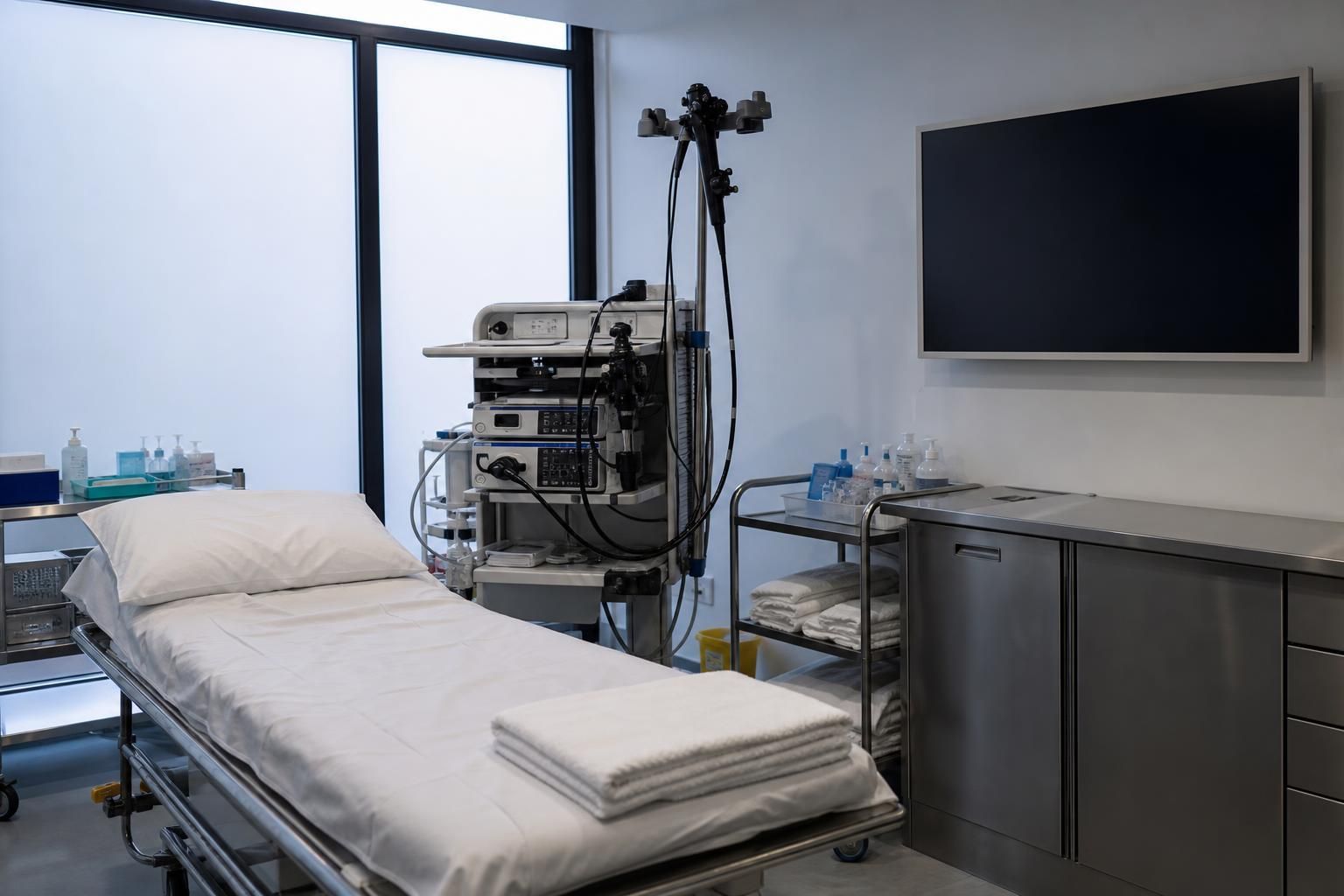
At Chartwell, colon cancer screening is usually discussed alongside symptoms, family history, and previous test results. That helps avoid both over-testing and under-investigation. If you want to understand how this fits within broader private digestive care, our private endoscopy services page is a useful overview.
In short, colon cancer screening through colonoscopy gives the clearest internal view of the bowel and the best chance of acting on what is found immediately.
What is the screening test for colon cancer?
The screening test for colon cancer is often a FIT stool test, but colonoscopy is the more definitive investigation. Which one is used depends on whether the aim is routine screening or symptom investigation.
If you need the most complete answer, colon cancer screening by colonoscopy is usually the stronger option.
Private colon cancer screening options
Private colon cancer screening gives patients faster access, more choice, and direct consultant-led planning. It is often chosen by people who do not want to wait, who need flexible appointment times, or who want a clear route after worrying symptoms.
Private colon cancer screening may include one or more of the following:
- Consultant gastroenterology review
- FIT testing arranged privately
- Colonoscopy with sedation options
- Biopsies if needed
- Follow-up discussion of results and next steps
This pathway can be especially helpful if symptoms are affecting daily life. It is also useful if you want a second opinion before committing to a procedure. A private consult can explain whether colon cancer screening should start with a stool test or go straight to colonoscopy.
If you are searching locally, our private endoscopy near me in Essex page explains how patients in Leigh-on-Sea, Essex, London, and surrounding areas can access assessment without long delays.
Private colon cancer screening is not about replacing public care. It is about offering a faster and more tailored route when that suits the patient. For many adults, that speed reduces anxiety and shortens the time between concern and clarity.
If you are weighing symptoms against screening, it can help to remember this. Colon cancer screening is most effective when it is timely, appropriate, and interpreted by a specialist who understands the full digestive history.
How private screening can reduce uncertainty
Private screening can reduce uncertainty because the pathway is usually more direct. You may move from consultation to testing with fewer steps.
That can matter when colon cancer screening is driven by worry, bleeding, or a change in bowel habit that has not settled.
NHS bowel cancer screening age and eligibility
The NHS bowel screening programme offers population screening for eligible age groups, with invitations sent automatically. It is designed for people without urgent symptoms, so it is not the same thing as diagnostic colon cancer screening for active bowel problems.
Eligibility and age ranges can change over time, so the safest approach is to check current NHS guidance. If you are symptomatic, do not wait for an invitation. Symptoms justify medical assessment now.
For some adults, an NHS screening kit may be appropriate and reassuring. For others, especially those with symptoms or a strong family history, colon cancer screening through a private consultant may be more suitable because it can move faster and may lead directly to colonoscopy.
The important distinction is simple. Programmes aimed at the general population are excellent for prevention. But they are not a substitute for targeted colon cancer screening when symptoms are present.
If you are deciding between public and private routes, the question is not which system is better overall. It is which one fits your risk, your symptoms, and your timeline. For many patients, private consultation makes that decision easier and more personalised.
What happens after an abnormal result?
An abnormal result does not mean cancer. It means colon cancer screening found something that needs a closer look.
After an abnormal FIT test, the next step is usually colonoscopy. After a colonoscopy, the next step depends on what was seen. That may include biopsy, polyp removal, reassurance, treatment planning, or referral for further care.
This is why timely follow-up matters. Colon cancer screening is only useful when results are acted on promptly. Waiting too long after an abnormal test can prolong anxiety and delay diagnosis.
A good private pathway should explain the result clearly, outline the next step, and give you a realistic sense of timing. It should also tell you what the result means in context. For example, a normal test is reassuring, but persistent symptoms may still need review.
If you are dealing with broader digestive concerns, follow-up may also involve related assessment such as constipation, IBS, or inflammatory bowel disease testing. The right plan depends on the whole clinical picture, not just one result.
In other words, colon cancer screening is a process, not a single event. The result is important, but the response to the result is just as important.
How quickly can private testing be arranged?
Private colon cancer screening is often arranged more quickly than standard waiting pathways. The exact timing depends on the test, the consultation availability, and whether further preparation is needed.
In practical terms, many patients want two things: speed and certainty. Private testing can help with both. A consultant can often decide quickly whether FIT is enough or whether colonoscopy is the smarter next step.
If you are anxious about symptoms, speed can matter as much as the test itself. Faster colon cancer screening may reduce the time spent worrying about vague abdominal symptoms or intermittent bleeding.
At Chartwell, patients often begin with a specialist discussion, then move to the appropriate investigation. That approach helps ensure the test is clinically justified. It also helps avoid unnecessary procedures.
If your question is not just about screening but about the most suitable private bowel investigation overall, our how to get an endoscopy appointment privately or through your GP guide explains the booking pathway in more detail.
The key message is straightforward. Private colon cancer screening can be arranged efficiently, but the best outcomes come from choosing the right test first.
Why choose Chartwell for private colon cancer screening?
Chartwell is designed for patients who want specialist-led digestive assessment with private access and clear next steps. That makes colon cancer screening feel less fragmented and more personal.
We focus on practical care. That includes consultant review, the right investigation for the symptom pattern, and follow-up that explains what the result means. For many patients, that combination is what turns colon cancer screening from a stressful unknown into a manageable plan.
You may also find it helpful that Chartwell offers related private services when symptoms do not fit a single diagnosis. These include chronic constipation assessment, IBS testing, and coeliac disease testing. That broader approach can be useful when bowel symptoms are not clearly explained by one test alone.
We also support patients who want a faster answer before choosing treatment or lifestyle changes. In many cases, colon cancer screening is the first step toward relief, because it rules in or rules out serious causes early.
If your priority is reassurance, speed, and consultant interpretation, a private pathway can be the most practical choice. It keeps the process focused on your symptoms and your concerns.
Key Takeaways
- Colon cancer screening helps find bowel cancer early and can also identify polyps and other causes of symptoms.
- FIT testing is simple and useful for stool-based screening, while colonoscopy offers the most complete view of the bowel.
- Symptoms such as bleeding, bowel habit changes, pain, tiredness, or weight loss should prompt medical assessment sooner.
- Private colon cancer screening can offer faster access, consultant-led advice, and a more tailored pathway.
- If symptoms persist or results are abnormal, follow-up matters as much as the original test.
Frequently Asked Questions
What are the early signs of colon cancer?
Early signs of colon cancer often include blood in the stool, a change in bowel habit, abdominal discomfort, tiredness, and unexplained weight loss. However, these symptoms can also be caused by less serious conditions, so colon cancer screening or medical assessment is important when the pattern is new or persistent.
What are the worst foods to avoid for colon health?
There is no single banned food, but it is sensible to limit highly processed foods, frequent processed meats, and an overall low-fibre diet. Colon cancer screening is still important, because diet alone cannot explain or rule out bowel disease if you have bleeding, pain, or a change in bowel habit.
What is the survival rate for colon cancer?
Survival depends on the stage at diagnosis, the person’s overall health, and how quickly treatment begins. That is why colon cancer screening matters so much: finding cancer earlier usually improves the chance of successful treatment. For an individual prognosis, a clinician must interpret the full clinical picture.
What is the screening test for colon cancer?
The main screening test for colon cancer is usually a FIT stool test, which checks for hidden blood. Colonoscopy is the more complete test and is often used when symptoms are present or when a FIT result needs follow-up. The right colon cancer screening test depends on your risk and symptoms.
Is private colon cancer screening worth it?
Private colon cancer screening can be worth it if you want faster access, consultant-led advice, and a clearer route to the right test. It is especially useful when symptoms are causing worry or when you do not want to wait for the next available pathway.